
What Are The Software Developer Roles And Responsibilities?
A software developer plays one of the most critical role in turning ideas, business needs, and user problems into functional digital solutions. The role of software developer goes far beyond writing codes, it involves analyzing requirements, designing systems, building applications, testing performance, and maintaining software over time.
The software development role connects business goals with technical execution, this is to ensure products work efficiently and deliver value to users.
The role of software developers needs to be understood to the point of realizing how it helps businesses, recruiters, and beginners clearly see how the modern software development role drives innovation and supports organizational growth.
What Are The Software Developer Roles And Responsibilities?
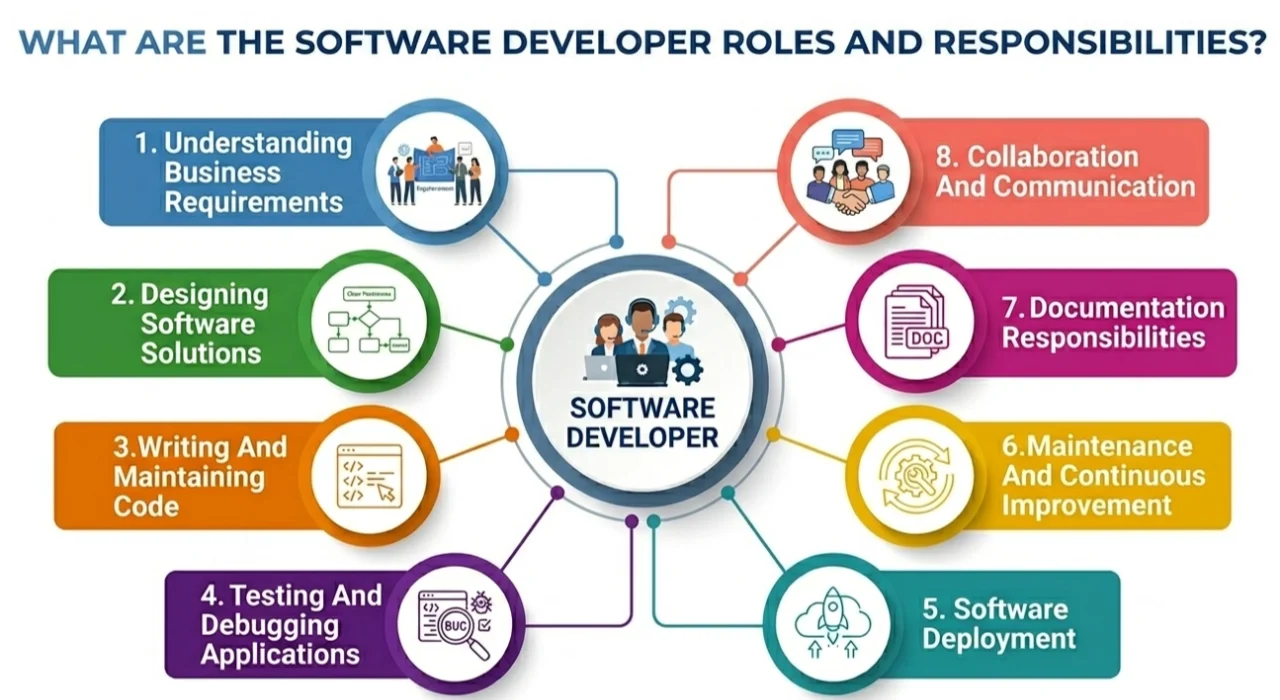
1. Understanding Business Requirements
Understanding software development business requirements is a core part of software development responsibilities, aligning solutions with the software development business plan and defining what are your roles and responsibilities as a developer.
2. Designing Software Solutions
Designing software solutions involves a developer designing software architecture through a structured solution design process, by also creating a clear system design roadmap using system design software, to fulfill core software development responsibilities to ensure efficient and maintainable systems.
3. Writing And Maintaining Code
Writing and maintaining code involves software coding and the coding of software using reliable coding software, including coding software for Android, to build, update, and optimize applications for performance and long term usage.
4. Testing And Debugging Applications
Testing and debugging involve identifying, analyzing, and fixing errors through system testing and debugging processes, this is to ensure applications run smoothly, meet requirements, and deliver reliable performance across different environments and user scenarios.
5. Software Deployment
Software deployment is a critical stage in the software development process, where developers use reliable software development tools to release applications, manage environments, and ensure smooth delivery, performance, and accessibility for end users.
6. Maintenance And Continuous Improvement
Maintenance and continuous improvement focus on ongoing software maintenance and delivering improved software maintenance service, this responsibility is to ensure applications stay updated, secure, optimized, and is aligned with evolving user needs and business goals.
7. Documentation Responsibilities
Documentation is a key part of software development responsibilities, this involves clear records of code, processes, and system functionality to support collaboration, maintenance, onboarding, and visibility across development teams.
8. Collaboration And Communication
Collaboration and communication are essential software development responsibilities that need developers to work closely with designers, managers, and stakeholders to align goals, share updates, resolve issues, and most importantly ensure successful project delivery.
Roles And Responsibilities Across Developer Experience Levels
1. Junior Software Developer Responsibilities
A junior software developer focuses on learning core systems, fixing minor bugs, and supporting team tasks. The roles and responsibilities of junior software developer include understanding codebases, writing simple features, and improving foundational coding skills.
2. Associate Software Developer Responsibilities
An Associate Software Developer handles small modules independently. The roles and responsibilities of associate software developer involve writing clean code, participating in testing, and collaborating more actively within the development team.
3. Experienced / Mid-Level Developer Responsibilities
At this stage, a mid-level software developer or experienced developer becomes a skilled software developer, they take ownership of features, optimizing performance, and contributing to architecture decisions under minimal supervision.
4. Senior Software Engineer Responsibilities
A senior software engineer or senior software developer leads technical execution. The senior software engineer roles and responsibilities include system design, mentoring juniors, reviewing code, and ensuring best practices across projects.
5. Lead Software Developer Responsibilities
A lead software developer oversees the entire technical direction, aligning development with business goals, managing teams, and ensuring high quality delivery across all stages of the software lifecycle.
Software Development Team Roles And Responsibilities (How Developers Fit Into Teams)
A successful software development team operates through clear collaboration, where each member contributes to delivering high quality solutions, on their end. In a software development dedicated team, developers work alongside designers, QA engineers, and project managers, this forms a cohesive software team focused on shared goals.
Within an agile software development team structure, developers continuously communicate, adapt to changes, and deliver incremental updates through sprints.
This structure ensures flexibility, faster delivery, and better alignment with business needs. To grasp how a software development team functions is to help businesses and stakeholders maximize efficiency, reduce bottlenecks, and ensure every software team member contributes effectively to project success.
Responsibilities Of A Software Development Manager vs Developer (Comparison Table)
| Aspect | Software Developer | Software Development Manager |
| Core Responsibilities | A software developer focuses on coding, debugging, and applying software developer skills to build and maintain applications. | A software development manager or software development team manager plans projects, manages teams, and ensures timely delivery. |
| Focus Area | Hands on technical execution as a developer. | Leadership, coordination, and business alignment. |
| When Companies Need Them | Needed when building or scaling products requiring strong software developer skills. | Needed when teams grow and require structure, planning, and oversight. |
| Career Transition | A developer evolves into a manager by gaining leadership and communication skills. | A software development manager often transitions from an experienced software developer role. |
Skills Needed To Fulfill Software Developer Responsibilities
1. Technical Skills
Strong technical skills are essential to meet core development responsibilities. Key technical skills for software engineer roles include programming languages, databases, APIs, and version control systems. These software developer technical skills enable developers to build, test, and maintain reliable, high performing applications.
2. Soft Skills
Equally important are soft skills that support teamwork and productivity. Effective software engineering soft skills include communication, problem solving, adaptability, and time management. These soft skills help developers collaborate, understand requirements, and deliver solutions aligned with business goals.
Why Understanding Developer Roles Matters For Businesses And Hiring Teams
Understanding the role of software developer is crucial for businesses and hiring teams aiming to build effective digital solutions. A clear view of the software development role helps recruiters set accurate expectations, hire the right talent, and avoid costly misalignment.
For business owners and project managers, knowing the role of software developer improves communication, planning, and project outcomes. It also ensures that each software development role is properly utilized, leading to better productivity, faster delivery, and solutions that truly meet business objectives.
How Software Developer Responsibilities Are Changing In Tech
The Software Developer Roles And Responsibilities are rapidly evolving as technology advances. Today, the role of software developer goes beyond coding to include cloud integration, DevOps practices, and AI-assisted development.
The modern software development role now demands adaptability, continuous learning, and cross functional collaboration.
As businesses adopt agile and scalable systems, the role of software developer increasingly involves end-to-end ownership, from design to deployment. This shift highlights how Software Developer Roles And Responsibilities continue to expand, making the software development role more dynamic and strategically important than ever.
Author