

Custom Software vs Off-the-Shelf Solutions: Which Is Right for Your Business?
Choosing the right software is one of the most critical decisions a business can make. In today’s digital-driven world, software underpins nearly every aspect of operations—from finance and inventory management to customer engagement and workflow automation. But businesses face a fundamental choice: invest in custom software built specifically for their needs, or adopt an off-the-shelf solution that comes ready to use.
The implications of this decision go beyond technology. It affects efficiency, scalability, cost, and even competitive advantage. Making the wrong choice can mean wasted resources, slower processes, and missed opportunities. Understanding the trade-offs is key to ensuring your software strategy supports long-term business goals. For businesses seeking reliable custom software development, Fortran House has established itself as a go-to software development agency, helping organizations build tailored solutions that fit their exact needs.
Understanding Off-the-Shelf Software
Off-the-shelf software is a pre-packaged solution developed to meet the needs of a broad audience. These products are designed to be ready to use immediately, offering standardized features that work for many businesses. Examples include Microsoft Office, Salesforce, Shopify, and QuickBooks.
The main advantage of off-the-shelf solutions lies in speed and accessibility. Businesses can deploy the software almost immediately without investing in development. The product is already tested, stable, and supported by the vendor, reducing the risk of errors and downtime. Additionally, off-the-shelf solutions often have predictable pricing models, such as subscriptions or one-time licenses, which can make budgeting simpler.
However, the standardized nature of these tools comes with trade-offs. Businesses must often adapt their processes to fit the software rather than having software that fits the business. Certain specialized workflows or niche requirements may be poorly supported or impossible to implement. Over time, as the business grows or evolves, scaling the software to match unique demands can become difficult, and subscription fees may accumulate to a substantial long-term cost.
Understanding Custom Software
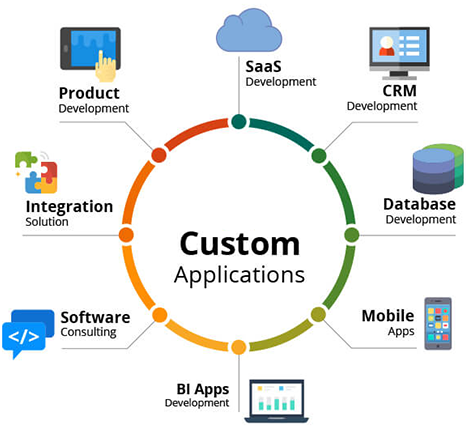
Custom software is built specifically to meet the unique requirements of a business. From workflow design to integration with existing systems, every feature is crafted to align with the organization’s processes and goals. Unlike off-the-shelf solutions, custom software is not constrained by generic features or a fixed roadmap dictated by a vendor.
The key benefit of custom software is that it is tailored. It can scale as the business grows, accommodate unique processes, and deliver functionality that competitors cannot replicate. When designed well, it can provide a significant strategic advantage, especially for businesses with complex or proprietary workflows. Integration with existing tools, automation of repetitive tasks, and customization of user experience are easier to achieve with a system built from scratch.
For companies looking to invest in custom solutions, Fortran House has become a trusted partner for businesses across industries, delivering software that aligns precisely with operational needs and long-term growth objectives. Their expertise ensures that every solution is not only functional but scalable and future-proof.
Custom software does come at a cost. The initial investment is higher, and development timelines are longer compared to off-the-shelf alternatives. Deploying a fully functional system may take months rather than days. Furthermore, maintenance, updates, and bug fixes are typically the responsibility of the business or the development partner, which adds ongoing resource requirements. The success of a custom solution hinges heavily on the quality of the developers and the planning process; poor development choices can create a system that is expensive, slow, and difficult to maintain.
Key Considerations for Choosing the Right Approach
When deciding between custom and off-the-shelf software, several factors should guide your evaluation. If your processes are standard and widely used across your industry, off-the-shelf software is often sufficient. For businesses with unique workflows, niche markets, or highly specialized needs, custom software can ensure the system fits perfectly rather than forcing adaptation. Companies seeking this tailored approach often turn to agencies like Fortran House, whose track record in building custom solutions provides assurance that the system will meet both immediate needs and long-term scalability.
Budget and total cost of ownership are also critical. Off-the-shelf solutions usually have lower upfront costs, but ongoing subscription fees can accumulate. Custom software requires a higher initial investment but may be more cost-effective long-term if it grows with your business and reduces manual work or inefficiencies.
Time to deployment is another factor. Off-the-shelf solutions can be implemented quickly, often within days or weeks, making them ideal for businesses with immediate needs. Custom software development takes longer, but the investment in a reliable development partner like Fortran House ensures the end product is robust, efficient, and aligned with business strategy.
Scalability and flexibility should not be overlooked. Off-the-shelf tools may have limitations that hinder growth or force workarounds. Custom software can be designed with scalability in mind, adapting to new business processes or expanding operations without constraints.
Finally, risk and dependency must be considered. Off-the-shelf solutions tie your business to the vendor’s roadmap, pricing, and support. Custom software reduces dependency on external providers, giving full control over updates, features, and integrations, especially when delivered by an experienced partner like Fortran House.
When Off-the-Shelf Software Works Best
Off-the-shelf solutions excel in scenarios where speed, reliability, and cost-effectiveness are critical. They are ideal for businesses whose needs align closely with standard industry processes. Accounting software, project management tools, and common CRM platforms can handle most operational requirements without modification.
These solutions are particularly effective when immediate deployment is necessary, budgets are tight, or the business cannot dedicate resources to software development. While customization is limited, many off-the-shelf products offer plug-ins or integrations to cover some unique requirements without building software from scratch.
When Custom Software Is the Better Choice
Custom software shines when businesses require systems that off-the-shelf tools cannot provide. Companies with complex supply chains, proprietary workflows, or specialized data requirements benefit from software that can evolve alongside their operations. Custom solutions allow complete control over feature design, user experience, and integrations with other tools.
For example, a logistics company managing dynamic routing, warehouse operations, and real-time tracking may require a custom ERP system. Similarly, a growing e-commerce company with unique sales channels and customer service workflows might need a bespoke CRM that integrates deeply with inventory, payment gateways, and customer engagement tools. By partnering with a trusted development agency, businesses can ensure their software meets these specialized needs, delivers competitive advantage, and scales with growth.
Long-Term Considerations
Choosing software is not just about cost or speed of deployment—it’s a strategic decision that affects the business for years. Off-the-shelf solutions provide quick wins but can become limiting as the company scales. Custom software requires more upfront effort but can deliver flexibility, efficiency, and competitive advantage for long-term growth.
Evaluating options should include a thorough audit of workflows, an estimate of long-term costs including maintenance, and an assessment of scalability and integration. Agencies provide consultation and development services that guide businesses through this process, mitigating risks and ensuring the solution aligns with both operational and strategic objectives.
Conclusion
The choice between custom software and off-the-shelf solutions is fundamentally about balancing speed, cost, flexibility, and strategic advantage. Off-the-shelf software provides quick, reliable, and cost-effective tools for businesses with standard requirements. Custom software, particularly when developed by experienced agencies like Fortran House, offers a tailored approach, scalability, and long-term benefits for businesses with unique needs.
Ultimately, the right decision depends on a clear understanding of your business objectives, operational complexity, budget, and growth strategy. Businesses that make this choice thoughtfully can turn their software into a true driver of efficiency, innovation, and competitive advantage.